


Hidden until reveal
Keep the handout out of player view until the table reaches the right moment.
D&D player handout maker
A handout earns its place when exact wording, an image, or its physical form changes what players notice and do. Make that part clear first. Decoration comes second.
Decide what the object changesMeet me where the salt road forks, at the third bell. Come alone, and tell no one at the Court.
THE ASHEN COURT
WANTED
ODRIK FLINT
for smuggling and arson, and the murder of a customs officer
Before you style it
Lead with what players can do with it. Keep only details a character could genuinely receive; move explanations, intended solutions, and future consequences into private prep.
A name, seal, date, map mark, or handwriting the players can inspect exactly.
A gap or contradiction worth discussing—ambiguous on purpose, not by accident.
A person, place, deadline, permission, or choice they can take into the next scene.
The handout editor in Multiloop
Start with a rendered design or your own image, then work directly on the object players will receive.
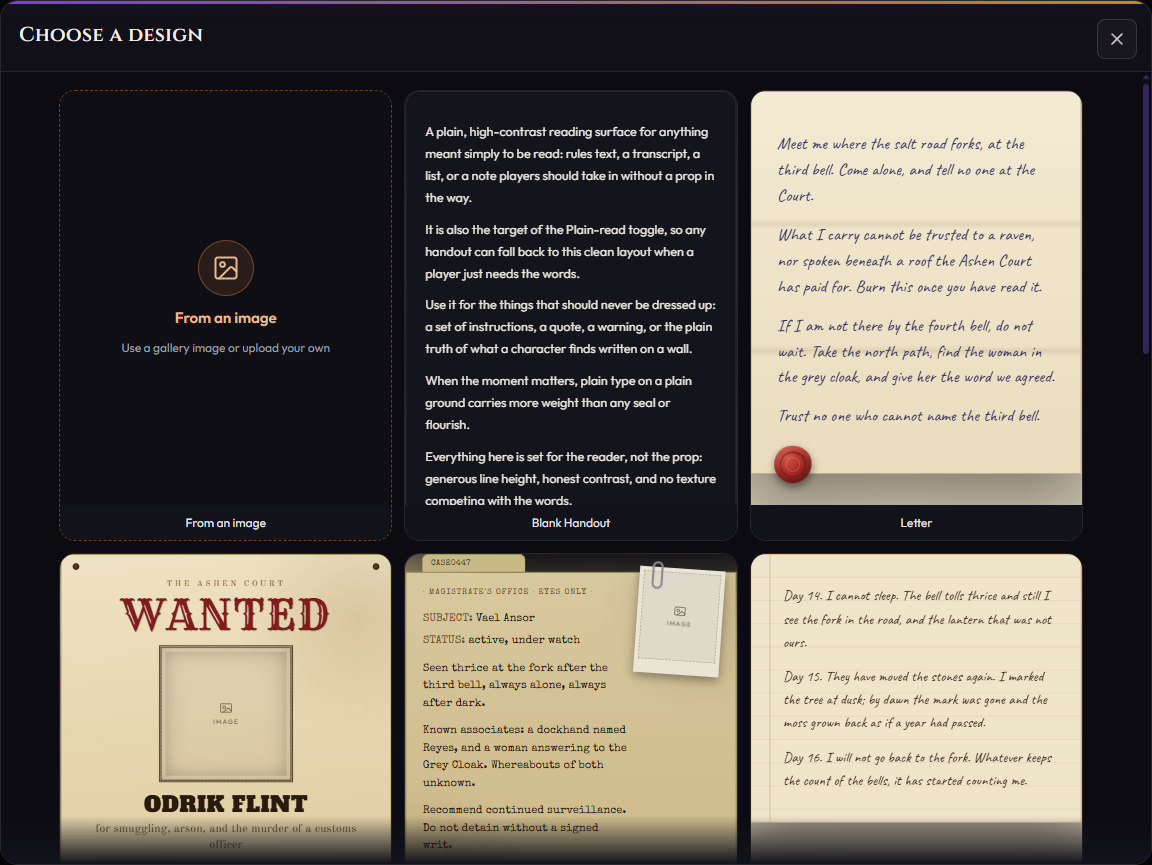
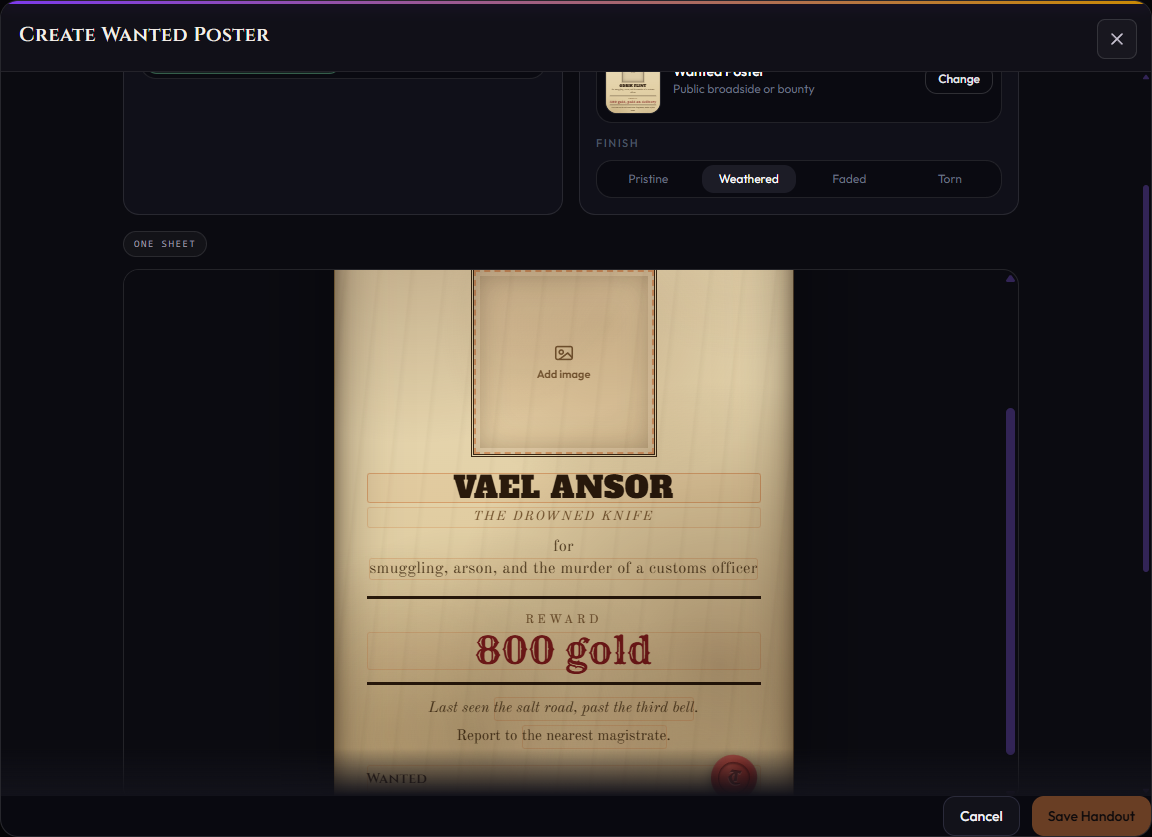
One designed object, two different jobs
Build and preview the handout as players will see it. Separately keep DM Notes, links, purpose, and reveal timing with the campaign record.
Keep the handout out of player view until the table reaches the right moment.
Link the handout to quests, encounters, characters, locations, items, factions, arcs, or sessions with a purpose.
Queue and present it at the table, or create a player-safe public link with optional password and expiry.
A handout in campaign context
Multiloop combines rendered handout materials, direct editing, private campaign context, linked records, reveal staging, presentation, and player-safe sharing.
A free Multiloop account and campaign are required. No content from this guide transfers automatically.
Use a handout when exact wording, an image, physical form, or the ability to revisit it improves play. A spoken detail can remain spoken.
Make it useful before beautiful
A useful handout gives players something they can notice, infer, remember, or act on. Its physical style should reinforce the information rather than hide it.
Usually less than the DM first writes. Keep the actionable clue and the details a character could genuinely receive. Move explanations, intended solutions, and future consequences into private prep notes.
No. Use a handout when the exact wording, image, physical form, or ability to revisit it improves play. A spoken detail can remain spoken.
Multiloop can create styled or image-based handouts, keep them hidden until reveal, store private DM notes, link them to campaign records, stage them for sessions, present them, and share player-safe links.
A controlled player reveal
Design the player-facing handout, then manage its private context and reveal from the campaign.